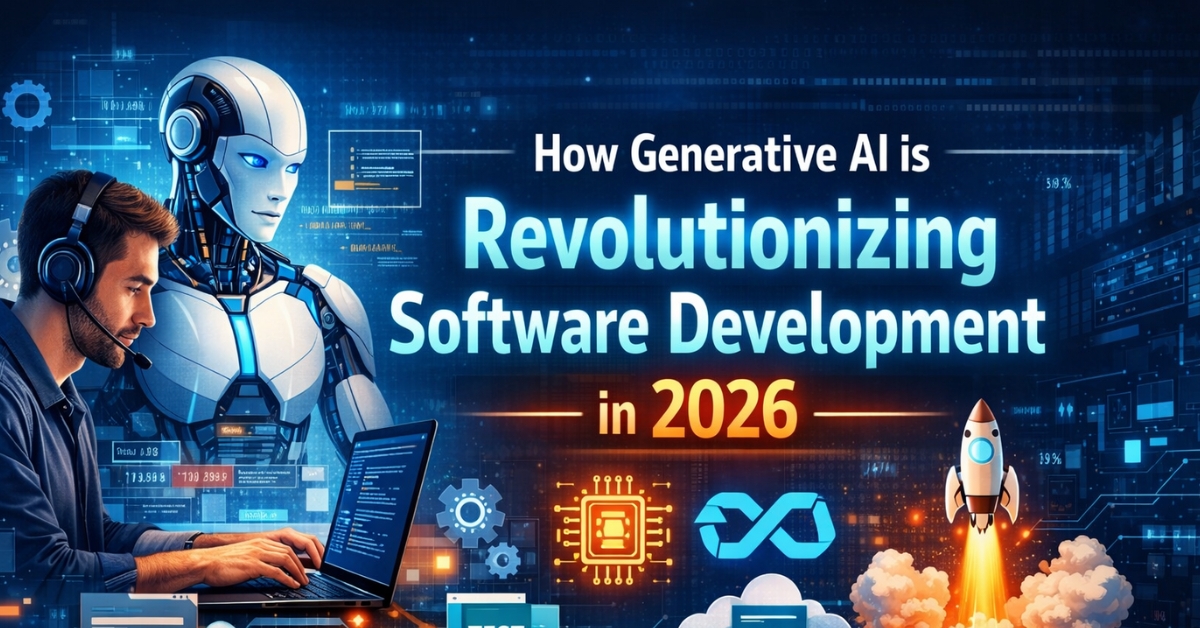
In 2026, software
development is no longer just about writing lines of code—it’s about collaborating
with intelligent systems that accelerate innovation. Generative AI has
moved from being an experimental technology to a core driver of modern
software engineering. From automating repetitive tasks to enhancing
creativity and decision-making, generative AI is reshaping how software is
designed, built, tested and deployed.
For businesses and
development teams, this shift is not optional. Companies that embrace Generative
AI in software development are building faster, smarter and more scalable
solutions—while those that don’t risk falling behind.
What Is Generative AI in Software Development?
Generative AI refers to AI
models capable of creating new content—including code, documentation,
designs, test cases and workflows—based on patterns learned from massive
datasets. Unlike traditional automation tools that follow predefined rules,
generative AI understands context and intent.
In software development,
generative AI acts as an intelligent co-creator, helping developers
transform ideas into working solutions more efficiently. In 2026, it is deeply
embedded across the development lifecycle, from planning to post-deployment
optimization.
AI-Assisted Coding: Faster, Smarter Development
One of the most visible
impacts of generative AI is in AI-assisted coding. Developers now rely
on AI-powered tools to:
- Generate boilerplate and complex code blocks
- Suggest optimized logic in real time
- Reduce syntax and logical errors
- Support multiple programming languages
seamlessly
This results in faster
development cycles, cleaner code and reduced development costs. Instead of
spending hours on repetitive tasks, developers can focus on solving real
business problems and building innovative features.
In 2026, AI-powered
development tools are not replacing developers—they are amplifying their
productivity.
Intelligent Debugging and Automated Testing
Debugging and testing have
traditionally been time-consuming phases of software development. Generative AI
has transformed this by introducing intelligent, proactive quality assurance.
AI-driven systems can now:
- Detect bugs before code reaches production
- Predict potential failures based on historical
data
- Automatically generate unit, integration and
regression tests
- Continuously monitor application health
With AI software testing,
teams achieve higher reliability, faster releases and significantly fewer
post-deployment issues.
Generative AI in DevOps and CI/CD Pipelines
DevOps in 2026 is smarter,
faster and more autonomous—thanks to generative AI. AI in DevOps enables:
- Intelligent CI/CD pipeline optimization
- Predictive deployment risk analysis
- Automated incident response and system recovery
- Performance tuning based on real-time usage
data
These AI-driven workflows
reduce downtime, improve system stability and allow organizations to deploy
updates with confidence. The result is a continuous delivery process
that aligns speed with reliability.
Personalized and User-Centric Software Development
Modern users expect
software that adapts to their needs—and generative AI makes this possible at
scale. By analyzing user behavior and preferences, AI helps create:
- Personalized dashboards and workflows
- Adaptive UI/UX designs
- Feature recommendations based on usage patterns
This shift toward AI-driven
user experience ensures that software is not just functional, but intuitive
and engaging. Businesses benefit from higher user retention, satisfaction and
long-term value.
How Generative AI Is Changing Developer Roles
The rise of generative AI
is redefining—not eliminating—developer roles. In 2026, developers are evolving
into:
- Strategic problem solvers
- System designers and architects
- AI collaborators and reviewers
New roles such as AI
engineers, prompt engineers and AI solution architects are emerging, while
traditional developers gain more time for innovation and decision-making.
Generative AI empowers
teams to do more with less, fostering creativity and accelerating product
innovation.
Security, Ethics and Compliance in AI-Driven Development
With great power comes
great responsibility. As AI becomes deeply embedded in software development, security
and ethical considerations are more critical than ever.
Generative AI helps improve
security by:
- Detecting vulnerabilities early
- Monitoring unusual system behavior
- Assisting with compliance and audit readiness
At the same time,
organizations must ensure responsible AI usage by addressing data privacy,
model transparency and ethical development practices. Secure and ethical AI
implementation builds trust with users and regulators alike.
Challenges of Adopting Generative AI in 2026
Despite its benefits,
adopting generative AI comes with challenges:
- Integrating AI with legacy systems
- Ensuring high-quality training data
- Upskilling teams to work effectively with AI
- Avoiding over-reliance on automated outputs
Successful adoption
requires a balanced approach, combining human expertise with AI
capabilities.
The Future of Software Development Beyond 2026
Looking ahead, generative
AI is paving the way for even more transformative possibilities:
- Software generated directly from natural
language instructions
- Autonomous systems that self-optimize and
self-heal
- Deeper collaboration between humans and AI
The future of AI-driven
software engineering is not about automation alone—it’s about building
smarter, more resilient digital ecosystems.
Why Businesses Must Embrace Generative AI Now
Generative AI is no longer
a future concept—it is the present foundation of modern software development.
In 2026, organizations that leverage AI-powered development tools gain speed,
efficiency, scalability and a clear competitive advantage.
By adopting Generative
AI in software development, businesses can innovate faster, reduce costs
and deliver exceptional digital experiences.
Ready to transform your
software development process?
Partner with an experienced software development team to integrate AI-powered
solutions that drive growth, efficiency and innovation.
Start your generative AI
journey today—and future-proof your software for 2026 and beyond. 🚀